Tuesday, September 27, 2011

Skylark, by Dezső Kosztolányi

This is another book I've chanced upon because I've been part of the NYRB book club over on Good Reads. It's really a quiet gem of a book, short and in some ways simple. We've been having quite a good discussion of it over there if you want to take a look--although you might have to join the group to see it. I'm not really sure how that part works.

The story begins in a moment of nervous anticipation. Skylark,  the daughter of two aging parents, is leaving for a week in the country with relatives. The threesome has never really been apart before. Skylark, despite the lighthearted quality of her name is the unmarriagable spinster daughter in a provincial outpost of the Austro-Hungarian empire. Though the novel was written many years later, after WWI had come and gone, the year is 1899 in the story--a year when it must have appeared that things would always be as they had been before. For me, part of the sadness of the book is that the characters do not know that in a few years time, extraordinary changes will have found there way even to sleepy Sárszeg. But the author certainly does, which made us wonder a bit why he had chosen this moment and represented it in some ways as eternal. More than one commenter in the discussion found there was a fairytale quality to the story.

Although this did not strike me as a purely satiric book, it is possible to read it as dark humor. In fact the author does signal this in some ways, because not only is Skylark one of the least aptly named people in the world--the parents apparently still call her that from a time when she would still sing--but she is not even the main character of the story. Most of the time she is offstage. This is not to say that she is an incidental character--she is in some ways the prime mover of the tale. Or maybe more accurately, the prime non-mover.

Once she is gone, the parents are left, very reluctantly, to their own devices. By stages, they rediscover and in turn show us this little town, which despite its provincial quality turns out to be quite a lively little place. I think this fits in with a realization that the journalist Miklós Ijas (who is surely a stand in for Kosztolányi himself, also a journalist) has at one point. He is one of those brilliant youths who is always longing to get away to the capital, as perhaps rightly, they should. He has a different destiny. But in becoming aware of the poignancy of the plight of this little family, whose members both love and are trapped by each other, he gains a deeper insight into the common bonds of humanity he shares with them. I had wondered how Kosztolányi, a famous and brilliant Hungarian literary figure, could write so penetratingly of people who shared none of these traits. A moment of similar empathy in  his own life probably lies behind this beautiful little novel.      

Monday, September 12, 2011

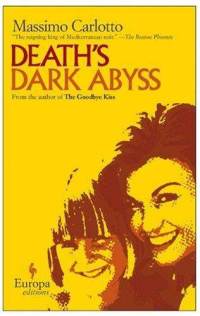
Death's Dark Abyss, by Massimo Carlotto

We often think of noir in terms of the American literary scene, but I'm not sure if anyone hits the true depths quite like those who write around the Mediterranean. I was going to say the Italians, but in fact my last visit to European noir was the trilogy by Jean Claude Izzo, who was part of the Italian immigrant community in Marseilles, but was, by nationality, French. You might think that the Italians would be a little too sunny for noir, but you would be wrong.

Carlotto's novel is about as bleak as it can get. I'll try not to spoil the first few pages for you, but let's just say that a jewelry robbery goes very horribly wrong and ends in a terrible crime, which leads one of the robbers to end up in jail for this crime, while his accomplice gets away.

Flash forward fifteen years and a man who's life was ruined by this fiasco receives a letter from a lawyer requesting that he help the incarcerated robber be pardoned on compassionate grounds. Although at first the man refuses, gradually it occurs to him that the imprisoned man might be manipulated into leading him to the accomplice, who has never been caught.

I think the book is a great introduction to noir, because it runs counter to many of our more usual assumptions about what makes a good tale. Neither criminal or victim are exactly what you would call role models, but both have a lot of energy and the stakes are very high. One question that the book raises is whether there can be atonement for horrible crimes. I remember being a bit dissatisfied with Ian McEwan's take on this in his own book, which even takes atonement as its title. Basically, he says no. I think this book provides a slightly different answer. I think what Carlotto would say is that there is no easy atonement. You'll have to read the book to find out why I think the qualifier is important.

(This post also appears on the Europa Challenge blog, a site you should definitely check out!)

Sunday, September 4, 2011

The Summer Book, by Tove Jansson

I had a chance to read a very wonderful book last month, thanks to joining up with the New York Review of Books books discussion at Good Reads. The first book that was picked was this short novel by the Tove Jansson. Jannson is pretty famous for her Finn Family Moomintroll childrens' books, though somewhat oddly, not so much in the U.S. I guess Astrid Lindgren of Pippi Longstocking  fame was our token Nordic writer for that era, but I do plan on reading them now.

The Summer Book is a series of related stories about summers spent on a small island off the coast of Finland that center around the lives of a grandmother and her granddaughter, Sophia. Sophia's father plays a somewhat peripheral role. Jansson's niece and her own mother were the models for this very wise book, and the whole family in fact spent much time out on these lonely but beautiful islands.

The discussion we had over on Good Reads was very thought provoking and we all found a lot of things to love about this book. I think for me what was most intriguing was the relation between the very old and the very young, which I think Jansson nailed. Life is a different thing when we are not in the midst of all the striving. I think these two states often have a lot to say to each other, though often in a subtle and indirect way. 

Check out this beautiful book if you get a chance. I actually read it in the "Sort Of" edition, which has a fair number of photos. The NYRB edition has a lot of her drawings.

You are spoiled for choice, really.

Tuesday, August 30, 2011

The Cozy Knave: A Gershwin and Penrose Mystery, by Dorte Hummelshoj Jakobsen

Occasional readers of this blog couldn't be blamed for assuming that when it comes to mysteries, my preferences lie towards the darker end of the spectrum, populated by tough guys and gals who'll stop at nothing to get to the bottom of a  crime or, uh, commit one. But I actually got into reading mysteries through the likes of Dorothy Sayers and Margery Allingham, and later practitioners like Simon Brett and Dorothy Simpson. In fact one of the blogs I have on my blog roll is Miss Lemon's Mysteries, hosted in a behind the scenes kind of capacity by Elizabeth Frengel, but presided over, surely, by the spirit of Miss Felicity Lemon, Poirot's right hand gal.

All this to say that it's certainly no leap for me to read Dorte Hummelshoj Jakobsen's The Cozy Knave, which wears the mantle of the British village cozy proudly. The fact that the author is Danish will not cause bafflement to anyone who reads her djskrimiblog , as Jakobsen is a regular reader of British crime fiction, cozy and not so much so. Suffice to say, Ms. Jakobsen knows her stuff.

The story opens with the return of a prodigal son of sorts to the village of Knavesborough. He has set himself up in a newly acquired stately home, bringing his butler along in tow. The residents of Knavesborough, particularly those of the feminine variety, are of course quite curious about this turn of events, and when the village is invited to a housewarming party at Netherdale Manor, who are they to say no?

Needless to say, there will be a murder or two in the course of the tale, old  history will be  unearthed and newer secrets revealed. With a large cast of characters, many of them far from cleared of suspicion, it takes a good guide to lead us through the labyrinth. Constable Archibald Penrose, with little help from the powers that be, but a lot of help from his fiancee, Rhapsody Gershwin, is such a guide, and 'what we know so far' gets summarized in an unobtrusive way between he and Rhapsody at several points in the book. An old-fashioned 'cast of characters' list at the front of the book might be helpful in such a populated work, although to her credit, Ms. Jakobsen uses very memorable names to help sort that out a little. ( You'll see.)

It would be unfair of me to go further into the plot, as in this type of book, plot is everything in a way that it isn't in many other literary forms. If you like the Midsomer Murders television series, based on the mysteries of Caroline Graham (and which the The Cozy Knave  actually mentions),  you are a fair way toward enjoying this book already. You can buy it in a variety of formats from Smashwords--the link is in the title above.

Sunday, August 21, 2011

Absolute Zero Cool, by Declan Burke

This is a novel of so many excellent parts that I don't really know where to start. Why don't you take a look at this video of John Connelly helping to launch the book for Liberties Press? I mean, who would you rather listen to, really--him or me? I know which I'd choose.


If you watched the video, you will know that this is not your average crime novel, in either content or design. Having read two of his other books, I can attest that Mr. Burke is quite capable of writing a really good book in the more conventional forms, but that is not what he is setting out to do here. The conceit is that the character "Declan Burke" is visited, while on a writer's retreat, by a character who was thought up for a book that never made it to a final draft. Karlsson--or Billy, as he now apparently wants to be called-- asks to be let out of the limbo that is the fate of an unfinished character. He turns out to be a hard guy to say no to.

I believe I would have been a bit bewildered by this book, which I might have expected to be a caper, though of the darkly comic kind, if I had not been clued in by an early blurb of Adrian McKinty's, mentioning another Irishman who wrote sui generis fiction, Flann O'Brien. Having read O'Brien's The Third Policeman not that long ago myself, I was more prepared for the 'outside the crime fiction box' story than I might have been.

Although much of the book is about the hammering out of a novel between the fictional Karlsson and the, well, equally fictional Declan Burke, the book's dark energy is really Karlsson's, I think. He has a Mephistophelian charisma, if not what you could really call charm. When Karlsson, as Billy, meets Declan Burke at the writer's retreat, he is missing an eye, and sports an eyepatch. I was curious about that throughout the book, and may have missed a beat when it was explained, but an Irishman with an eyepatch always has some relation to Joyce, I suppose. For me, though, and this is just my own take on the thing, the one-eyed nature of Billy has everything to do with his monomania and, forgive the pun, lack of perspective. His relentlessly dark vision of our life on earth is persuasive, at times funny, and yet always bracing. He is the classic case of the guy who is too smart for his own good, by which I mean beyond the reach of help, because this is where he chooses to put himself.

The title of the book refers to the coldest possible temperature, which is more theoretical than actual, in which all energy is frozen. Nothing moves. This reminds me of Dante's version of hell, which is not heat, but ice. Karlsson, who want to bring everything down, is perhaps an agent of such a space, but Karlsson, much as he would like to go his own inexorable way, is, despite himself, still moved by love and loss, even as the book draws toward its close.

Karlsson is certainly an aspect of Declan Burke, for where else could he have come from? But Declan Burke, as either character or author, has learned a thing or two more about life, thanks to marriage and a child, than poor Karlsson ever dreamt of in his philosophies. Karlsson, I think, is aware of the lack.

Don't worry, Karlsson. You can always hope there will be a different sort of ending in the  movie.

Wednesday, August 17, 2011

Red Lights (Feux Rouges), by Georges Simenon


I'm on a bit of a New York Review of Books imprint kick lately. So much so that I recently joined the Good Reads NYRB Classics group in hopes that this would bump some of these great books up the list a bit for me. That idea has already paid off. But the idea of reading this roman dur from the great Simenon came through a slightly different channel, when I read fellow Good Reader James Henderson's brief review of the book. I was intrigued, because I had no idea that Simenon had written any novels that were not set in Paris or its environs, let alone in the U.S.

This novel came out here in 1953. It starts off on Labor Day weekend, when Steve and Nancy Hogan are preparing to leave New York and join the mad throngs heading to pick up their kids in parts north. For Steve and Nancy, the road leads to Maine.

As it's the nineteen fifties, they are of course going to have a drink first. For Steve, it's clear early on, that it's not going to be just one.

Simenon is pitch perfect on his mid last century American suburbanites. It's not a surprise in one sense--he lived for some years in Connecticut.  We are in Mad Men territory, of course, but Simenon's vision is less of an exaggeration than the television show. But the feeling rising in the heart of our protagonist is very similar to that of Don Draper, without the mysterious past (which Simenon's book reveals to be an unnecessary dramatic twist). Despite the good life that they have, Steve feels somewhat strangled by it, which comes out when he drinks as a nasty sort of antagonism towards his wife, who has risen to a position of somewhat greater stature than Steve's and which he resents.

I was somewhat surprised that Simenon chose to characterize Steve's hostility to Nancy as a rare thing, brought on by the end of summer and an uncharacteristic overindulgence in alcohol. His manner, though truthfully rendered, would seem to me to be more realistic as a more common occurence. However, perhaps this is just a different kind of pattern. In any case, although Steve's longing for a more manly, freer, life comes across as selfish and immature, it also comes across as authentic. Faced with his part in the annual automotive migration north, which will restore all to domesticity come the end of the holiday weekend, anyone would resent that feeling of being a mere cog in the great wheel. And it is really only when he falsely turns Nancy into the prime denier of his wishes for freedom that he begins to go very badly wrong.

I happened to watch Goodfellas for the first time in its entirety the other night. I  am not particularly interested in gangster flicks, so I was probably a bit overdue to appreciate this one. It was good, and I was struck by a similar longing in the main character to escape what he considered the pathetic life of the schnooks--the ordinary, law-abiding, slightly boring civilians who in the end he finds himself among despite all his intentions.

Steve's story takes him to a different place. But the question of how to escape the subjugation of self that is part of what civilized life asks of us is not really answered. I have a feeling Simenon didn't answer it for himself completely, either. Nor have we.

Monday, August 8, 2011

Rogue Male, by Geoffrey Household: on the value of imprints

At Bookshop Santa Cruz, where I work, we not only sell new books but used ones. Eventually, and inevitably, some books of both these categories end up discounted further, and are called Sidewalk Sale books. We haven't done an actual sidewalk sale for many a year, but occasionally we pull these
books away from their spot by the window and feature them a bit more prominently. You'd think that these would be the most sorry rejects in the store, but the truth is, many of the real gems are hidden there, and if I could only read books I found among these for the rest of my life, I would probably still die quite happy.

Geoffrey Household's Rogue Male is such a book. I'd heard of Household before, but never been tempted to pick up his work before. And with such a title, I certainly wouldn't have rescued this book from the bargain bin, even at a reduced price. Why did I? Because it was published under the imprint of the New York Review Books. Because I saw that it had one of their distinctive covers, I didn't reject it out of hand, but picked it up. And once I started reading--well, you know how it goes with good books.  You end up getting hooked.


Not that the cover illustration itself is a sure seller. It pictures what looks to me like a very frazzled and probably dead animal.  What an imprint says to someone like me is that a publishing house or a small wing of a publishing house that I respect has decided that this volume is worth backing. In the case of the NYRB books, these are often if not always reprints of work that has slid into some degree of obscurity. They may have had their heyday, they may not. Over on their webpage, they even have a slot where you can suggest an out-of-print title for them to think about republishing.

Rogue Male is a classic cat and mouse tale, with the also classic twist that the hunter soon becomes the hunted. The unnamed protagonist is a professional hunter who has decided on a kind of whim to see if he can  break through the defenses of a dictator and get close enough to shoot. He is not actually going to shoot the man, of course, just see if he can do it. He comes within a hair's breadth of success, but a miss is as good as a mile in this case. Tortured and then left for dead, the hero of the tale manages to escape and begin a thrilling journey across all kinds of terrain. It turns out to be a bit more complicated than that, but that's enough to set you off with. I will just add that there was one point in the story in which I had to break off and go to work, and I actually felt quite uncomfortable leaving the narrator in the predictament he had found himself in.

Victoria wrote what I found to be a very helpful introduction to the book (which I read afterwards), giving me a bit more context for the yarn Household spun. In particular, she explains what Household meant by 'Class X' in the novel. It had a sort of snobbish possibility in it that I was wary of, but in fact, I did Household a disservice. In his own life, Household was quite a traveler and one night shared dinner in a restaurant in Toledo with a Spaniard of limited means. After he left, Household got up to pay his bill, and found that the man had paid it for him ahead of him. This kind of gesture went a long way with him, and embodied the qualities of the Class X type of person far more than any outward credentials.

There is a moment or two in this tale that are definitely not for the squeamish, but if you're willing to entrust yourself to a writer from Class X  and if you're looking for a vivid and gripping read, this is the one for you.